Working a Ski Season in Myoko on a Japanese Working Holiday Visa
This guide is for young Australians who want to spend a winter working in Myoko, and for the families and owners who host them. It explains what the Japanese working holiday visa allows, who can apply, what the application needs, and what to do after you arrive in Myoko.
Everything below comes from Japan's Ministry of Foreign Affairs (MOFA), the Embassy of Japan in Australia and Myoko City, all read on 19 October 2026. Visa rules change, so check the linked pages before you apply. This is general information, not immigration or legal advice.
What the working holiday visa is for
MOFA describes the working holiday programmes as a way for young people to spend a holiday in a partner country. Work is allowed as an incidental activity, to top up travel funds. Japan's first programme was with Australia, which started in 1980. MOFA lists no annual cap on the number of visas for Australians.
The Embassy is direct about the purpose. The program is not designed for people who mainly intend to work or study in Japan. If your main aim is a job, the Embassy says to apply for a work visa instead. For the proposed schedule, the Embassy also asks applicants not to stay in any one place for longer than three months. That matters if you picture a full season in one resort town.
Who can apply from Australia
The Embassy of Japan in Australia lists these conditions:
- You must be an Australian citizen currently living in Australia. Australians travelling or living overseas must come back to Australia to apply.
- You must be aged 18 to 30 at the time of the application, that is, until the day you turn 31.
- You must never have held a Japanese working holiday visa before. For Australians, the visa can be issued only once.
- Married or de facto couples can apply only if both meet the requirements and no dependants come with them.
- You must be in good health and of good character.
- You need at least A$2,500 for a single person, or A$3,500 for a couple, for the first part of the stay.
What the application needs
The Embassy's list of documents is longer than many people expect:
- a valid Australian passport and a copy of the photo page,
- the visa application form and a passport photo taken in the last six months,
- flight details to Japan and back to Australia (a one-way ticket is accepted if you have funds for the return flight),
- a resume,
- a proposed schedule for the first six months, filled in without entries such as "unknown",
- a signed statement of purpose of at least one typed A4 page, and
- a three-month Australian bank statement, no older than one month.
If you have a job already arranged, the schedule should give its details, and the Embassy may ask to see the contract.
Where to apply, how long it takes, and the cost
Canberra residents apply in person at the Embassy, without an appointment. People in other states apply to the Consulate-General in charge of their area: Sydney, Perth, Brisbane, Cairns or Melbourne. The Embassy says online applications are not yet available for Australian residents.
- Processing: at least one week. There is no priority service.
- Timing: you can apply up to one year before you enter Japan. The visa is valid for entry for one year.
- Fee: the Embassy says there is no charge for the working holiday visa.
How long you can stay
The visa is a single-entry visa. It gives an initial stay of six months, counted from the day you enter Japan. You can apply for an extension at an Immigration office in Japan before your stay runs out. The Embassy warns that extensions are at Immigration's discretion and may not be granted.
If you leave Japan in the middle of your stay, check the re-entry rules first. You need time left on your stay, a valid Residence Card, and a re-entry permit or special re-entry permit. The Embassy warns that leaving without these can end your working holiday without meaning to.
Where you cannot work
Both MOFA and the Embassy say working holiday makers must not work at bars, cabarets, nightclubs and other premises affecting public morals. MOFA adds gambling places, and the Embassy adds dance halls and pachinko parlours. MOFA says a participant who works at such a place breaks the immigration law and faces deportation. The Embassy points to Article 2 of the Act Controlling Business Affecting Public Morals for the categories.
After you arrive in Myoko
MOFA says working holiday makers must visit the municipal office where they live within 14 days of finding a place to settle down, to report their address.
The Embassy says you can receive your Residence Card on arrival at Narita, Haneda, Chubu or Kansai airport. You must carry it at all times while in Japan.
In Myoko, you register at the city office. Myoko City asks people moving in from overseas to bring their passport and Residence Card. A couple registering as one household also needs an official document proving the relationship, such as a marriage certificate, with a Japanese translation.
For changes to your Residence Card status or period of stay, Myoko City points to two Immigration offices:
- Niigata Branch Office (Niigata Airport terminal building): 025-275-4735
- Nagano Branch Office (Nagano No. 1 Joint Government Building): 026-232-3317
When you leave Japan, Myoko City asks you to file a moving-out notification, whether or not you have a re-entry permit.
Finding work and paying tax
MOFA and the Embassy point job seekers to Hello Work, Japan's public employment service, and to the Employment Service Centers for Foreigners. Some Hello Work offices can help in English. MOFA also warns about businesses that claim to help with the visa. It says no organisation in Japan works with it to run the programmes.
For Australian tax, the Embassy suggests asking for a statement of earnings in English while in Japan, and calling the Australian Taxation Office when you get home.
A checklist before you book
- Check that you are 30 or under on the day you apply, and that you are in Australia.
- Find which Embassy or Consulate covers your state.
- Prepare the six-month schedule, statement of purpose and bank statement.
- Plan to move on after about three months, as the Embassy suggests.
- Arrange medical insurance before you leave.
- Keep your Residence Card with you, and report your address in Myoko within 14 days.
What we could not verify, and therefore left out
- How Japanese income tax applies to working holiday wages. A consulate page from 2022 gives a rate, but we could not confirm it against the current tax rules.
- Whether working holiday makers living in Myoko must join National Health Insurance, and what it costs.
- Which Myoko employers hire working holiday makers, and what they pay.
- Whether the Hello Work office covering Myoko offers help in English.
- How housing for seasonal staff is usually arranged in Myoko.
Related guides
- Owning a Home in Japan Does Not Come With a Visa: What Australians Need
- Emergencies and Medical Care in Myoko: 119, #7119 and Local Hospitals
More from the Journal
Browse every guide in the Myoko Kogen Journal. This guide is general information, not immigration, tax or legal advice.
Sources
All URLs retrieved 2026-10-19.
- Ministry of Foreign Affairs of Japan — The Working Holiday Programmes in Japan (purpose, partner countries, eligibility, prohibited work, notification within 14 days, job seeking): https://www.mofa.go.jp/j_info/visit/w_holiday/index.html
- Embassy of Japan in Australia — Working Holiday Visa (eligibility, documents, where to apply, processing, fee, length of stay, re-entry, employment): https://www.au.emb-japan.go.jp/itpr_en/visa_workingholiday_en.html
- Myoko City — 外国人住民のかたへ (resident registration for foreign residents, moving in and out, Immigration offices): https://www.city.myoko.niigata.jp/docs/52835.html
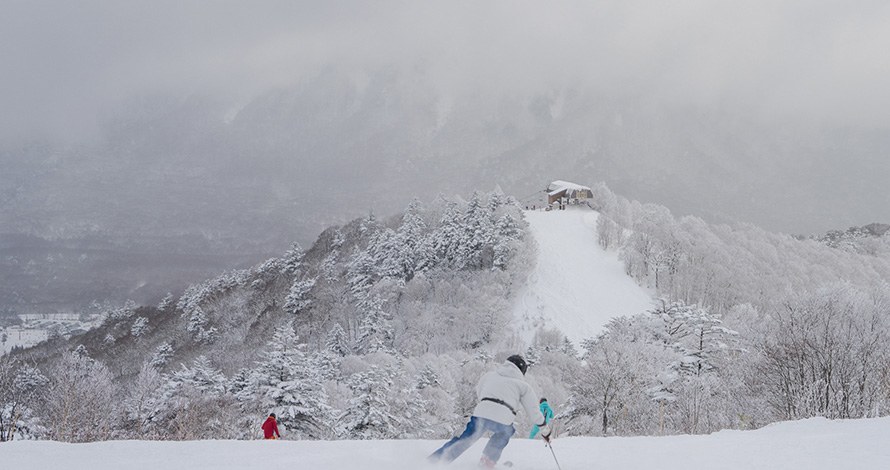
Header photo: “A skier on a snow-covered slope in the Myoko-Togakushi Renzan National Park, with frosted trees behind” (Ministry of the Environment, Japan / 環境省), https://www.env.go.jp/nature/nationalparks/list/myoko-togakushi-renzan/spot/. Edited (cropped and resized) for use as the header image on this page. Used under the Public Data License (PDL) Version 1.0.