What Is Ikenotaira Onsen? Myoko's Hot Spring Village by Imori Pond
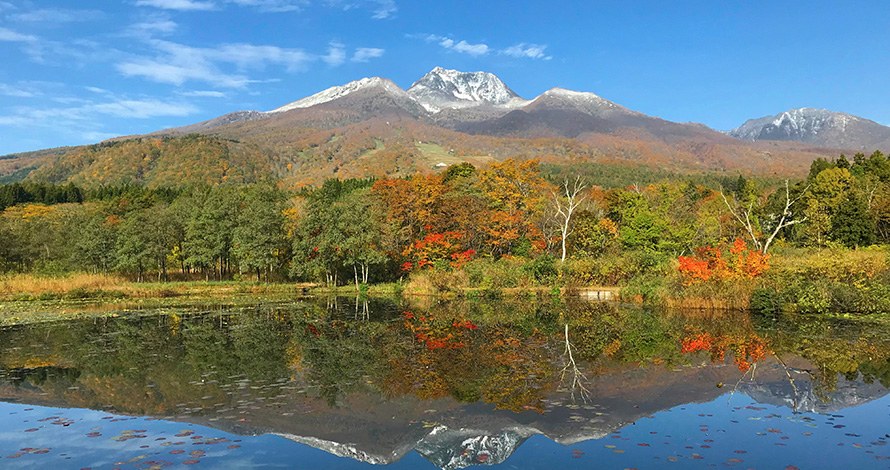
Ikenotaira Onsen is the hot spring village around Imori Pond, in the middle of the Myoko Kogen area. If you are looking at a house in Myoko, you will probably drive through it, and you may look at homes in or near it. This short guide explains where its water comes from, what the black mud bath is, where to bathe as a day visitor, and what the national park rules mean for building there.
Everything below comes from the Myoko Tourism Bureau's pages, Myoko City's pages, and the Ministry of the Environment's management plan for the national park. We read all of them on 19 November 2026. Fees and opening hours can change, so check with each facility before you go. This is general information, not advice on any property.
Where it is and how old it is
The tourism bureau says Ikenotaira Onsen sits at about 750 m above sea level. It describes a highland spa whose views across the four seasons centre on a white birch wood and Imori Pond. The village opened as a hot spring in 1924.
It is one of seven hot spring villages that together make up the Myoko Kogen Onsen area. The others are Akakura, Shin-Akakura, Myoko, Suginosawa, Seki and Tsubame.
The Ministry of the Environment's plan places Ikenotaira inside Myoko-Togakushi Renzan National Park. It lists Akakura, Ikenotaira, Seki and Tsubame as hot spring villages in the Myoko Kogen part of the park, along with the ski areas and sights such as Imori Pond and Naena Falls.
The water: clear, and in places black
The tourism bureau gives these points about the water:
- Source: the water is piped from Minami-Jigokudani ("south hell valley"). Myoko Onsen draws on the same source, so the two villages share one spring.
- Type and temperature: a simple sulphur spring at 72°C.
- Two kinds of bath: a clear, colourless simple spring, and a sulphur spring known as the black mud bath (kokudei-yu). The black mud bath is offered only at some facilities.
The black water is part of a local nickname. The bureau calls the area's springs the "Myoko 7-5-3 baths": seven villages, five sources, and three colours besides clear. The three are milky white at Tsubame, reddish brown at Seki, and black at part of Ikenotaira.
Where to bathe as a day visitor
The tourism bureau lists two day-bathing places at Ikenotaira.
Myoko Kogen Fureai Kaikan (city-run)
Myoko City runs this bathhouse as a place for people to meet and relax. It also has rest rooms, meeting rooms and tennis courts. The city's page, updated on 28 October 2026, gives these details:
- Open: every day except Thursdays and the New Year break (29 December to 3 January).
- Hours: 8:30 am to 9 pm.
- Bath fee for one day, bathing tax included: for people from within the city, ¥250 for adults and free for junior high school age and under. For people from outside the city, ¥450 for adults and ¥250 for junior high school age and under, with children not yet at school free.
- Address and phone: 2400-7 Sekikawa, Myoko City; 0255-86-4620.
The bath is one bath each for men and women. The city notes the building was renewed in April 2013.
Alpenblick Spa day onsen
The tourism bureau describes this as a day-bathing facility at Ikenotaira, known for its open-air black mud bath. If you want to try the black water, this is the place the bureau names. The bureau's page adds these points:
- It has a sauna, and you can see Mt Myoko from the indoor bath.
- Summer hours: 9 am to 10 pm, last entry 9:30 pm, closed on Tuesdays (with some closures for maintenance).
- Winter hours: 7 am to 10:30 pm, last entry 10 pm, open every day.
- There is a restaurant and a shop, and free parking.
Things to do around the village
- Imori Pond and the Visitor Center. The Ministry of the Environment says Mt Myoko's views draw visitors to Imori Pond, with more than 100 kinds of wild birds, dragonflies and butterflies. In winter, a snowshoe course lets you see animals such as hares and Japanese squirrels in the forest. Myoko Kogen Visitor Center stands next to the pond and explains the park's nature and local life. It has a lounge with a café and a view of Mt Myoko.
- Riburan Forest Walking Trail. The tourism bureau describes a loop trail that starts at Imori Pond and takes about two hours. It lists it for spring, summer and autumn.
- Skiing. Myoko City lists Ikenotaira Onsen Alpenblick Ski Area among the ski areas in the city. The city also notes that in October 1950, the first lifts in Japan approved by the then Ministry of Transport were built at two ski areas. One of them was Ikenotaira Onsen Kayaba Ski Area.
- Cross-country skiing. The tourism bureau says the Ikenotaira Sports Field cross-country ski course was built on the site of the former Ikenotaira Sports House. It is used as a practice ground for junior athletes, and the public can also ski there in winter. It closes from 29 December to 3 January.
Getting there by bus in winter
Myoko City runs local buses in the Myoko Kogen area. The city's notice says that from 1 December, the stop for the Visitor Center moves from inside the car park to the city road on its south side. It also warns that buses may run late in snowy weather. Check the current timetable on the city's bus page before you travel.
What the national park rules mean if you build here
Because Ikenotaira is inside the national park, new buildings need to meet the park's rules. The Ministry of the Environment's management plan sets out its approach for Ikenotaira:
- Aim: a hot spring resort for longer stays and a base for skiing and climbing, by improving existing facilities and keeping a pleasant street scene.
- Height above sea level: about 800 m is the upper limit. Above that, new lodging is not allowed. For buildings in general, only facilities needed for the public good, or for farming, forestry and fishing, are allowed.
- Building height: 15 m or less. A building already taller than 15 m may not go above its current height.
- The view from Imori Pond: a building that would seriously block the view from the pond towards Mt Myoko will not be approved.
- Waste water: sewage and other waste water that has not been treated must not drain into Imori Pond or the streams that flow into it.
- Roofs: along part of the road between Akakura and Ikenotaira, a single-slope roof may be allowed where it is needed because of falling snow and roof clearing.
These are the park's standards in general. Whether a given plot or plan meets them is decided case by case, so talk to the park office and a local professional before you buy or build. Our guide to park permits explains the process.
What we could not verify, and therefore left out
- Whether a non-resident owner pays the "within the city" fee at Fureai Kaikan. The city's page does not define who counts. Ask at the counter.
- Fees at Alpenblick Spa, and the dates its summer and winter hours start. The tourism bureau's page does not give them, so check with the facility.
- Bus lines and times for Ikenotaira. The timetables are image-based PDFs we could not read reliably, so we did not give times or line names.
- Whether Kayaba Ski Area still exists under that name. The city's history note names it only for 1950.
- How many inns and homes the village has today. We found no official figure.
Related guides
- What Is Imori Pond? Myoko's Mirror Pond, Nature Garden and Visitor Center
- Building or Renovating in Myoko's National Park: Permits and Design Rules
More from the Journal
Browse every guide in the Myoko Kogen Journal. Our articles are general information only; check fees and opening times with each facility, and get professional advice before buying or building.
Sources
All URLs retrieved 2026-11-19.
- Myoko Tourism Bureau — 温泉 (Hot springs: the seven villages, the "7-5-3" baths, Ikenotaira Onsen's height, opening year, source, water type and day-bathing places): https://myokotourism.jp/onsen/
- Myoko Tourism Bureau — 池の平温泉 (Ikenotaira Onsen area page: Alpenblick Spa day onsen, Fureai Kaikan, Visitor Center, Riburan Forest trail): https://myokotourism.jp/area/ikenotaira-area/
- Myoko City — 妙高高原ふれあい会館 (Myoko Kogen Fureai Kaikan: days, hours, fees, address): https://www.city.myoko.niigata.jp/docs/837.html
- Myoko City — 妙高スキー場情報 (Ski area list and the first approved lifts in 1950): https://www.city.myoko.niigata.jp/docs/106.html
- Ministry of the Environment — 妙高戸隠連山国立公園管理運営計画書 本文 (Management plan for Myoko-Togakushi Renzan National Park: Myoko area and Ikenotaira standards): https://www.env.go.jp/park/content/000105026.pdf
- Ministry of the Environment — 妙高戸隠連山国立公園 見どころ (Park highlights: Imori Pond and Myoko Kogen Visitor Center): https://www.env.go.jp/nature/nationalparks/list/myoko-togakushi-renzan/spot/
- Myoko Tourism Bureau — 池の平スポーツ広場「クロスカントリースキーコース」 (Ikenotaira Sports Field cross-country ski course): https://myokotourism.jp/tourist-spots/池の平スポーツ広場「クロスカントリースキーコース」/
- Myoko Tourism Bureau — リブランの森遊歩道 (Riburan Forest Walking Trail): https://myokotourism.jp/tourist-spots/リブランの森遊歩道/
- Myoko Tourism Bureau — アルペンブリックスパ日帰り温泉 (Alpenblick Spa day onsen: black mud open-air bath, hours, parking): https://myokotourism.jp/tourist-spots/アルペンブリックスパ日帰り温泉/
- Myoko City — 妙高市市営バス (City buses: winter notice and timetables): https://www.city.myoko.niigata.jp/docs/892.html
Header photo: “Mount Myoko with early snow, reflected in the still water of Imori Pond, with autumn trees along the shore” (Ministry of the Environment, Japan / 環境省), https://www.env.go.jp/nature/nationalparks/list/myoko-togakushi-renzan/spot/. Edited (cropped and resized) for use as the header image on this page. Used under the Public Data License (PDL) Version 1.0.